Traditional Chinese
 English


environmental heat stress.
TES-1369B
Datalogging area thermal environment monitor. Quick WBGT measurement for assessing.
environmental heat stress. Air velocity measurement. Maximum / Minimum recording reading. Auto datalogging. Manual Data Memory Capacity. Data hold function. Auto power off.
Heat Stress Monitor
Availability: In stock
environmental heat stress.
.jpg)
- Specification
- Application
Measurements |
Globe, Dry bulb, Wet bulb Temperature and Air velocity. |
|
Measurement computed |
WBGTin, WBGTout, Heat Index and Wind Chill Temperature. |
|
Temperature measurement |
Sensor : NTC thermistor |
|
Range : -5°C to +100°C (23°F to 212°F) |
|
|
Resolution : 0.1°C / 0.1°F |
|
|
Accuracy : ±0.5°C / ±0.9°F |
|
|
Airflow measurement |
Sensor : Heated RTD Range : 0 ~ 20m/s Resolution : 0.1m/s Accuracy : ±(4% reading + 0.1m/s) |
|
Memory capacity |
Manual : 99 sets |
|
Auto : 65000 sets |
|
|
Operating conditions |
-5°C to +60°C (23°F to 140°F) , 0%RH to 100%RH |
|
Power source |
One pcs 9V alkaline battery or 9V AC adapter. |
|
Battery life |
Approx. 8 hours |
|
Size |
221(H) × 154(W) × 53(D)mm |
|
Weight |
Approx. 1000g |
|
Accessories |
Instruction manual, Battery, Carrying case, RS-232 cable, CD software, 10 meters sensor cable, 6 inch diameter globe, 2 inch diameter globe. |
礦場:煤礦場、石油礦場、金礦場...等
提煉場:石化工業、鋼廠、鋁廠...等
製造場:玻璃廠、造船廠、磚廠、水泥廠...等
Related Products
.jpg)
‧Type K. J. E. T. Thermocouple input.
‧Dual channels with multi-functions (T1, T2 & T1-T2).
‧0.01% of reading Accuracy & MAX/MIN/AVG display.
‧Built-in thermal printer with interval time setting.
‧Dual channels with multi-functions (T1, T2 & T1-T2).
‧0.01% of reading Accuracy & MAX/MIN/AVG display.
‧Built-in thermal printer with interval time setting.
- US$ 462
- Log in for sale price
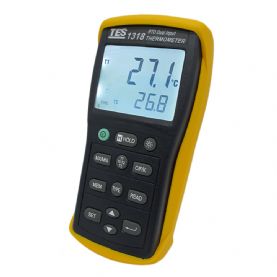
‧Pt 3916/3926/385 RTD standard.
‧Warning beeper with HI/LO setting.
‧Time setting.
‧MAX / MIN with TIME, MAX-MIN AVG Hold function.
‧℃ / ℉ / K User-Selective.
‧Back - Light LCD display.
‧Dual input function T1/T2 temperature display. (1318)
‧Warning beeper with HI/LO setting.
‧Time setting.
‧MAX / MIN with TIME, MAX-MIN AVG Hold function.
‧℃ / ℉ / K User-Selective.
‧Back - Light LCD display.
‧Dual input function T1/T2 temperature display. (1318)
- US$ 99
- Log in for sale price
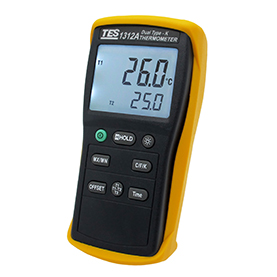
‧Highly accurate thermometer with thermocouple K type.
Single channel input. (1311A)
Dual channel input. (1312A)
‧Data hold function.
‧MAX / MIN / AVG function.
‧Offset function.
‧℃ / ℉ User-Selective.
‧0.1℃ / 0.1℉ resolution.
‧Auto power off function.
‧Memory and Read function. (1311A)
Single channel input. (1311A)
Dual channel input. (1312A)
‧Data hold function.
‧MAX / MIN / AVG function.
‧Offset function.
‧℃ / ℉ User-Selective.
‧0.1℃ / 0.1℉ resolution.
‧Auto power off function.
‧Memory and Read function. (1311A)
- US$ 77
- Log in for sale price
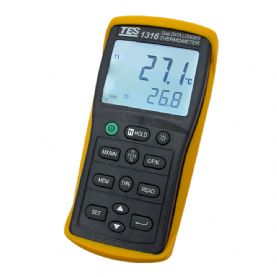
‧Highly accurate thermometer with thermocouple J, K, T, E, N, R, S type.
‧Dual input function T1/T2 temperature display. (1316)
‧Warning beeper with HI/LO Setting.
‧MAX/MIN with TIME, AVG for HOLD function.
‧℃/℉/K User-Selective.
‧Back-Light LCD display.
‧Dual input function T1/T2 temperature display. (1316)
‧Warning beeper with HI/LO Setting.
‧MAX/MIN with TIME, AVG for HOLD function.
‧℃/℉/K User-Selective.
‧Back-Light LCD display.
- US$ 187
- Log in for sale price
.jpg)
‧ Type “K” Thermocouple Input.
‧ Switchable Resolution 0.1°/ 1°.
‧ With ℃ & ℉ switching.
‧ Max Hold Function.
‧ Data Hold Function.
‧ Room Temperature Compensated.
‧ Aux output JACKS.
‧ T1 & T2 dual points display.
‧ T1 – T2 differential measurement.
‧ Flip-up stand.
‧ Switchable Resolution 0.1°/ 1°.
‧ With ℃ & ℉ switching.
‧ Max Hold Function.
‧ Data Hold Function.
‧ Room Temperature Compensated.
‧ Aux output JACKS.
‧ T1 & T2 dual points display.
‧ T1 – T2 differential measurement.
‧ Flip-up stand.
- US$ 100
- Log in for sale price
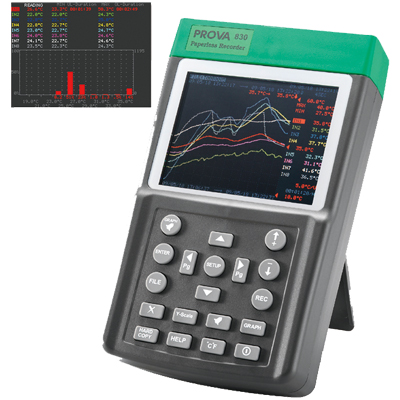
‧Prova 830 can work as Multi-input thermometer or Paperless recorder.
‧5.7” Color TFT LCD (320 x 240) with backlight.
‧8 input temperature measurement/logging (℃/℉).
‧Color graphic display of 8 curves at the same time.
‧Display of max and min values for each input.
‧Selection of 11 types of thermocouple.
‧Easy socket for thermocouple mini connector.
‧Basic accuracy 0.1% ± 1 ℃ (K type).
‧Programmable Hi-Lo alarm with timers when out of HI-LO limits.
‧Sampling rate 8 inputs / 1 second.
‧28 hour recording with Lithium battery of 3400mAH.
‧Standard 2G SD memory card (stores 3.8-year of data).
‧SD card directly read by PC.
‧Easy data file management (Read and Delete functions).
‧Built-in calendar clock.
‧Accept analog outputs from instruments.
‧Independent input setup (type of thermocouple, Hi-Lo alarm values, name of Engineering Unit).
‧Isolated input protection of 350Vp-p between any two inputs.
‧Programmable Engineering Unit (E.U.) to integrate analog output (-50 to 60 mV) from instruments (e.g. Sound level meter, Humidity meter, Current adaptor).
‧Screen hardcopy into bit map files for easy documentation.
‧Ready to use package (thermocouples, SD card, and battery).
‧Digital and analog (bargraph) data display.
‧Statistics data (Histogram) for easy analysis.
‧Easy curves manipulation (hide or display selected curves).
‧5.7” Color TFT LCD (320 x 240) with backlight.
‧8 input temperature measurement/logging (℃/℉).
‧Color graphic display of 8 curves at the same time.
‧Display of max and min values for each input.
‧Selection of 11 types of thermocouple.
‧Easy socket for thermocouple mini connector.
‧Basic accuracy 0.1% ± 1 ℃ (K type).
‧Programmable Hi-Lo alarm with timers when out of HI-LO limits.
‧Sampling rate 8 inputs / 1 second.
‧28 hour recording with Lithium battery of 3400mAH.
‧Standard 2G SD memory card (stores 3.8-year of data).
‧SD card directly read by PC.
‧Easy data file management (Read and Delete functions).
‧Built-in calendar clock.
‧Accept analog outputs from instruments.
‧Independent input setup (type of thermocouple, Hi-Lo alarm values, name of Engineering Unit).
‧Isolated input protection of 350Vp-p between any two inputs.
‧Programmable Engineering Unit (E.U.) to integrate analog output (-50 to 60 mV) from instruments (e.g. Sound level meter, Humidity meter, Current adaptor).
‧Screen hardcopy into bit map files for easy documentation.
‧Ready to use package (thermocouples, SD card, and battery).
‧Digital and analog (bargraph) data display.
‧Statistics data (Histogram) for easy analysis.
‧Easy curves manipulation (hide or display selected curves).
- US$ 1870
- Log in for sale price
.jpg)
‧Type “K” Thermocouple Input.
‧Switchable Resolution 0.1°/1°.
‧With ℃ & ℉ switching.
‧Data Hold Function.
‧Room Temperature Compensated.
‧Flip-up stand.
‧Switchable Resolution 0.1°/1°.
‧With ℃ & ℉ switching.
‧Data Hold Function.
‧Room Temperature Compensated.
‧Flip-up stand.
- US$ 50
- Log in for sale price
.jpg)
‧K/J Type thermocouple input.
‧Auto ranging.
‧Dual display LCD.
‧8000 Record Data logging Capacity.
‧Maximum / Minimum / Average reading.
‧Relative reading.
‧RS-232 interface.
‧Auto ranging.
‧Dual display LCD.
‧8000 Record Data logging Capacity.
‧Maximum / Minimum / Average reading.
‧Relative reading.
‧RS-232 interface.
- US$ 139
- Log in for sale price
.jpg)
‧ K/J Type thermocouple input.
‧ Auto ranging.
‧ Data Hold.
‧ Maximum/Minimum reading.
‧ Relative reading.
‧ Multi-channels scanner (T1→T2→T1-T2).
‧ Auto ranging.
‧ Data Hold.
‧ Maximum/Minimum reading.
‧ Relative reading.
‧ Multi-channels scanner (T1→T2→T1-T2).
- US$ 77
- Log in for sale price
.jpg)
‧ Type “K” Thermocouple Input.
‧ Switchable Resolution 0.1°/ 1°.
‧ With ℃ & ℉ switching.
‧ Max Hold Function.
‧ Data Hold Function.
‧ Room Temperature Compensated.
‧ Aux output JACKS.
‧ T1 & T2 dual points display.
‧ T1 – T2 differential measurement.
‧ Flip-up stand.
‧ Switchable Resolution 0.1°/ 1°.
‧ With ℃ & ℉ switching.
‧ Max Hold Function.
‧ Data Hold Function.
‧ Room Temperature Compensated.
‧ Aux output JACKS.
‧ T1 & T2 dual points display.
‧ T1 – T2 differential measurement.
‧ Flip-up stand.
- US$ 67
- Log in for sale price
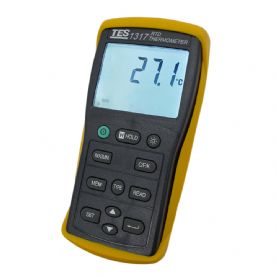
‧Pt 3916/3926/385 RTD standard.
‧Warning beeper with HI/LO setting.
‧Time setting.
‧MAX / MIN with TIME, MAX-MIN AVG Hold function.
‧℃ / ℉ / K User-Selective.
‧Back - Light LCD display.
‧Dual input function T1/T2 temperature display. (1318)
‧Warning beeper with HI/LO setting.
‧Time setting.
‧MAX / MIN with TIME, MAX-MIN AVG Hold function.
‧℃ / ℉ / K User-Selective.
‧Back - Light LCD display.
‧Dual input function T1/T2 temperature display. (1318)
- US$ 88
- Log in for sale price
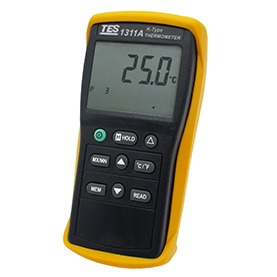
‧Highly accurate thermometer with thermocouple K type.
Single channel input. (1311A)
Dual channel input. (1312A)
‧Data hold function.
‧MAX / MIN / AVG function.
‧Offset function.
‧℃ / ℉ User-Selective.
‧0.1℃ / 0.1℉ resolution.
‧Auto power off function.
‧Memory and Read function. (1311A)
Single channel input. (1311A)
Dual channel input. (1312A)
‧Data hold function.
‧MAX / MIN / AVG function.
‧Offset function.
‧℃ / ℉ User-Selective.
‧0.1℃ / 0.1℉ resolution.
‧Auto power off function.
‧Memory and Read function. (1311A)
- US$ 60
- Log in for sale price
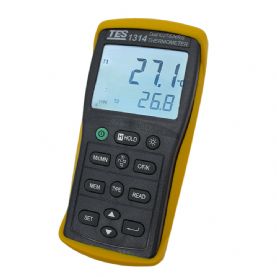
‧Highly accurate thermometer with thermocouple K, J, E, T, R, S, N type.
‧Dual input function T1/T2 temperature display.
‧Warning beeper with HI/LO setting.
‧MAX/MIN with TIME, MAX–MIN AVG, HOLD function.
‧℃ / ℉ / K User-Selective.
‧Back-Light LCD display.
‧Dual input function T1/T2 temperature display.
‧Warning beeper with HI/LO setting.
‧MAX/MIN with TIME, MAX–MIN AVG, HOLD function.
‧℃ / ℉ / K User-Selective.
‧Back-Light LCD display.
- US$ 99
- Log in for sale price
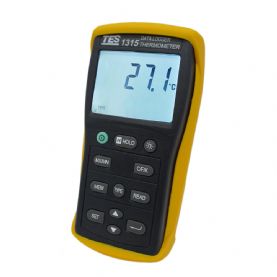
‧Highly accurate thermometer with thermocouple J, K, T, E, N, R, S type.
‧Dual input function T1/T2 temperature display. (1316)
‧Warning beeper with HI/LO Setting.
‧MAX/MIN with TIME, AVG for HOLD function.
‧℃/℉/K User-Selective.
‧Back-Light LCD display.
‧Dual input function T1/T2 temperature display. (1316)
‧Warning beeper with HI/LO Setting.
‧MAX/MIN with TIME, AVG for HOLD function.
‧℃/℉/K User-Selective.
‧Back-Light LCD display.
- US$ 170
- Log in for sale price
.jpg)
‧Type “K” thermocouple input.
‧Data hold function.
‧MAX / MIN / AVG function.
‧Offset function.
‧℃ / ℉ User-Selective.
‧0.1℃ / 0.1℉ resolution.
‧Auto power off function.
‧Memory and Read function.
‧Data hold function.
‧MAX / MIN / AVG function.
‧Offset function.
‧℃ / ℉ User-Selective.
‧0.1℃ / 0.1℉ resolution.
‧Auto power off function.
‧Memory and Read function.
- US$ 55
- Log in for sale price
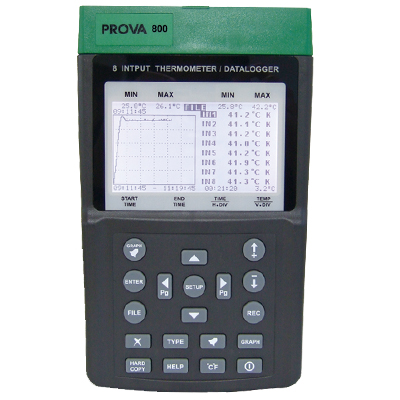
‧Analysis for thermal profile and thermal distribution.
‧8 input temperature measurement/data logging (℃/℉).
‧Graphic display of overall trend for each input.
‧4.5” STN LCD (240 x 128) with backlight.
‧Timers for the durations out of HI and LO limits.
‧Selection of 11 types of thermocouple (K, J, E, T, R, S, N,…).
‧Easy socket for thermocouple mini connector.
‧Basic accuracy 0.1% ± 1 ℃ (K type).
‧Programmable Hi-Lo alarm for each input.
‧Display of max and min values for each input.
‧Sampling Rate 8 Inputs / 1 second.
‧24 Hour Recording with Alkaline Batteries of 2400mAH.
‧Standard 2G SD memory card (stores 3.8-year data).
‧Optional 8G SDHC memory card.
‧SD card directly read by PC.
‧Easy data file management (Read and Delete functions).
‧Built-in calendar clock.
‧Independent Input Setup (type of thermocouple, Hi-Lo alarm values, name of Engineering Unit).
‧Isolated Input Protection of 350Vp-p between any two inputs.
‧Programmable Engineering Unit (E.U.) to integrate Analog Output (-60 to 60 mV) from instruments (e.g. Sound level meter, Humidity meter, Current adaptor).
‧Screen hardcopy into files.
‧Paperless Recorder.
‧Ready to use package (Thermocouples, Memory Card, and Batteries etc.).
‧8 input temperature measurement/data logging (℃/℉).
‧Graphic display of overall trend for each input.
‧4.5” STN LCD (240 x 128) with backlight.
‧Timers for the durations out of HI and LO limits.
‧Selection of 11 types of thermocouple (K, J, E, T, R, S, N,…).
‧Easy socket for thermocouple mini connector.
‧Basic accuracy 0.1% ± 1 ℃ (K type).
‧Programmable Hi-Lo alarm for each input.
‧Display of max and min values for each input.
‧Sampling Rate 8 Inputs / 1 second.
‧24 Hour Recording with Alkaline Batteries of 2400mAH.
‧Standard 2G SD memory card (stores 3.8-year data).
‧Optional 8G SDHC memory card.
‧SD card directly read by PC.
‧Easy data file management (Read and Delete functions).
‧Built-in calendar clock.
‧Independent Input Setup (type of thermocouple, Hi-Lo alarm values, name of Engineering Unit).
‧Isolated Input Protection of 350Vp-p between any two inputs.
‧Programmable Engineering Unit (E.U.) to integrate Analog Output (-60 to 60 mV) from instruments (e.g. Sound level meter, Humidity meter, Current adaptor).
‧Screen hardcopy into files.
‧Paperless Recorder.
‧Ready to use package (Thermocouples, Memory Card, and Batteries etc.).
- US$ 1155
- Log in for sale price
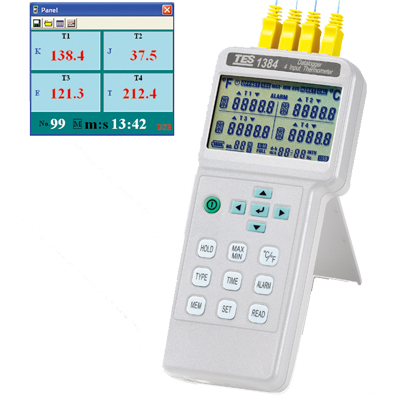
‧Isolated Input Protection of 350Vp-p between any two inputs.
‧Highly accurate thermometer with thermocouple K, J, E, T, R, S, N, L, U, B, C types.
‧4 input function T1/T2/T3/T4 temperature display.
‧Programmable Hi – Lo alarm for 4 inputs.
‧Display of MAX, MIN, MAX–MIN and AVG values of 4 inputs.
‧Independent Input Setup (type of thermocouple, Hi-Lo alarm values).
‧Memory and Read function (99 sets).
‧512KB auto datalogging capacity(4 input:36000 sets /1 input: 100000 sets.
‧USB interface.
‧Highly accurate thermometer with thermocouple K, J, E, T, R, S, N, L, U, B, C types.
‧4 input function T1/T2/T3/T4 temperature display.
‧Programmable Hi – Lo alarm for 4 inputs.
‧Display of MAX, MIN, MAX–MIN and AVG values of 4 inputs.
‧Independent Input Setup (type of thermocouple, Hi-Lo alarm values).
‧Memory and Read function (99 sets).
‧512KB auto datalogging capacity(4 input:36000 sets /1 input: 100000 sets.
‧USB interface.
- US$ 217
- Log in for sale price